What Is Sudoku, and How Do You Start?
Sudoku is a number puzzle built on logic, not math. To learn how to play Sudoku, fill the empty squares while following three rules.
A standard puzzle has a 9x9 grid. Thick lines split it into nine smaller 3x3 boxes. Some numbers, called clues, are already filled in.
Your goal is to place numbers 1 through 9 in every row, column, and box. Each number must appear once in each area. The starting clues stay fixed.
If you wonder, “How do I play Sudoku without guessing?” start with an area that has few empty squares. Find its missing numbers, then check which spaces can hold them.
The numbers act as symbols. You do not need to add, subtract, or multiply them. Easy puzzles often show clear moves. Hard puzzles need more careful checks.
Basic Rules of Sudoku
The same three rules apply across the whole board. A number may fit a row but still break a column or box rule. Check all three before you enter it.
- Rows: Each horizontal row must contain 1 through 9 once.
- Columns: Each vertical column must contain 1 through 9 once.
- Boxes: Each 3x3 box must contain 1 through 9 once.
Imagine a row has 1, 2, 3, 5, 6, 7, 8, and 9. The only missing number is 4. So the empty square must hold 4.
Before placing 4, check the square’s column and box. If either already has a 4, stop and review the board. A clue or earlier move may be wrong.
A number can appear many times on the full board. It cannot appear twice in the same row, column, or box. These are the core Sudoku rules.
Understand the Sudoku Grid
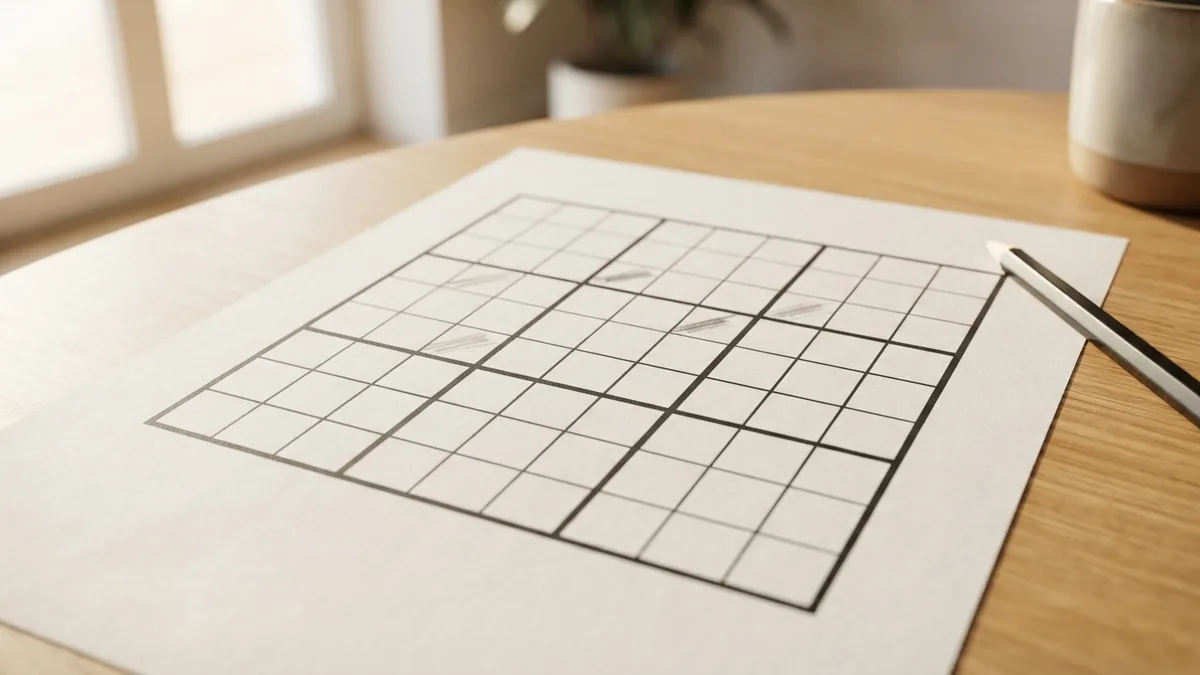
The standard grid has 81 squares, arranged in nine rows and nine columns. Thick lines mark the nine 3x3 boxes. Each square belongs to one row, one column, and one box.
Those three areas limit the choices for each square. A middle square, for example, must fit its row, its column, and the center box. Check all three when testing a number.
To play a Sudoku puzzle, scan for a row, column, or box with few empty squares. Note which digits it lacks. Then test each open square against its row, column, and box.
Some games offer smaller boards for practice. A 4x4 puzzle uses numbers 1 through 4 and four 2x2 boxes. A 6x6 puzzle uses numbers 1 through 6 and six 2x3 boxes.
These smaller boards use the same idea, but they are Sudoku variants. A 3x3 grid is not the standard game. For a first puzzle, try an easy 9x9 board.
The starting clues help set the puzzle’s difficulty. Easy boards often offer clear moves at once. Harder boards may need notes and several rounds of checking.
Techniques for Solving Sudoku
Start with the process of elimination. For an empty square, rule out numbers already in its row, column, or box. The numbers left are its candidates.
If one candidate remains, place it. This move is called a single. Then check the linked row, column, and box again. One sure move can reveal another.
You can also look for a number with only one possible spot in an area. Say a box lacks 2, 4, and 8. If just one square can hold 8, place it there.
Use this simple loop as you solve:
- Choose a row, column, or box with few empty squares.
- List the numbers missing from that area.
- Check each open square against its row, column, and box.
- Place a number only when the rules leave one choice.
- Scan nearby areas again after each new entry.
Logic is safer than guessing. A guess can seem right for several moves, then cause a clash. If you cannot prove a move, leave the square blank and scan elsewhere.
This method works on easy, medium, and hard puzzles. Tougher games take more steps, but sound moves still come from the same rules and clues.
Beginner Tips for Sudoku
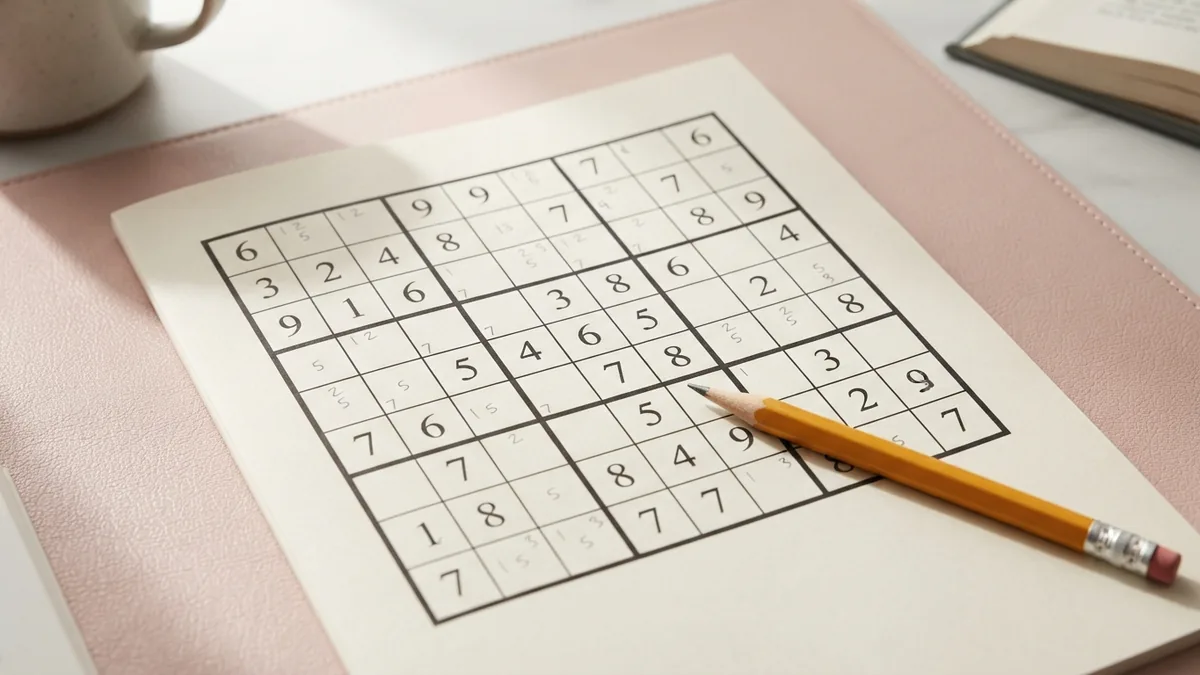
Use pencil marks, also called notes, when a square has more than one candidate. A square might hold 2, 5, or 9. Remove a note when a new number rules it out.
Keep notes neat and update them often. If your game has a notes feature, use it to track possible numbers. On paper, write lightly so you can erase old choices.
Scan the grid in a set order. Check all rows, then all columns, then all boxes. After placing a number, revisit the areas linked to that square.
Do not enter a number just because it seems likely. Check all three rules first. This quick check can stop one wrong move from causing trouble later.
Stuck? Move to another part of the board and look for a new single. You can also pause, then return with fresh eyes. Many free online Sudoku games offer hints, but try a full scan first.
These beginner tips work for paper puzzles and online games. Pick a difficulty that lets you find some moves without feeling rushed. Build a steady routine before you try harder boards.

Advanced Strategies for Harder Puzzles
When singles run out, compare candidate notes across a row, column, or box. Two squares may share the same pair of candidates, such as 3 and 7. If those are the only spots for both numbers, remove 3 and 7 from other squares in that area.
This pattern is often called a pair. You do not need to memorize its name to use it. Look for matching notes, then check whether those numbers can be removed from other squares.
Another useful move starts with a number that has only a few possible spots in a box. If all its spots fall in one row, remove that number from the rest of the same row outside the box.
Keep each move tied to a clear reason. If a puzzle seems stuck, review your notes for mistakes and scan the board again. Do not add a guess just to make progress.
For a tougher Sudoku game, take breaks and check each new entry against all three rules. A calm, repeatable method beats rushed number placement. With practice, these steps help you solve harder puzzles with more confidence.