Understanding the Solitaire Setup
Classic Solitaire, also called Klondike, uses one standard deck of 52 cards. Remove the jokers before you begin. Leave enough table space for seven tableau piles, four foundations, and the stock and waste piles.
The tableau holds 28 cards. Its seven piles grow from one card to seven cards, from left to right. Only the top card of each pile starts face up. The other cards stay face down until you uncover them.
- First pile: one card, face up
- Second pile: two cards, top card face up
- Third pile: three cards, top card face up
- Fourth pile: four cards, top card face up
- Fifth pile: five cards, top card face up
- Sixth pile: six cards, top card face up
- Seventh pile: seven cards, top card face up
The remaining 24 cards form the stock pile. Set them face down beside the tableau. Leave room beside the stock for a waste pile, where you place cards drawn from the stock.
Set aside four open spaces for the foundation piles. Each foundation holds one suit, built from Ace through King. The game objective is to move all 52 cards onto those foundations.
That is the classic layout.
Step-by-Step Dealing Instructions
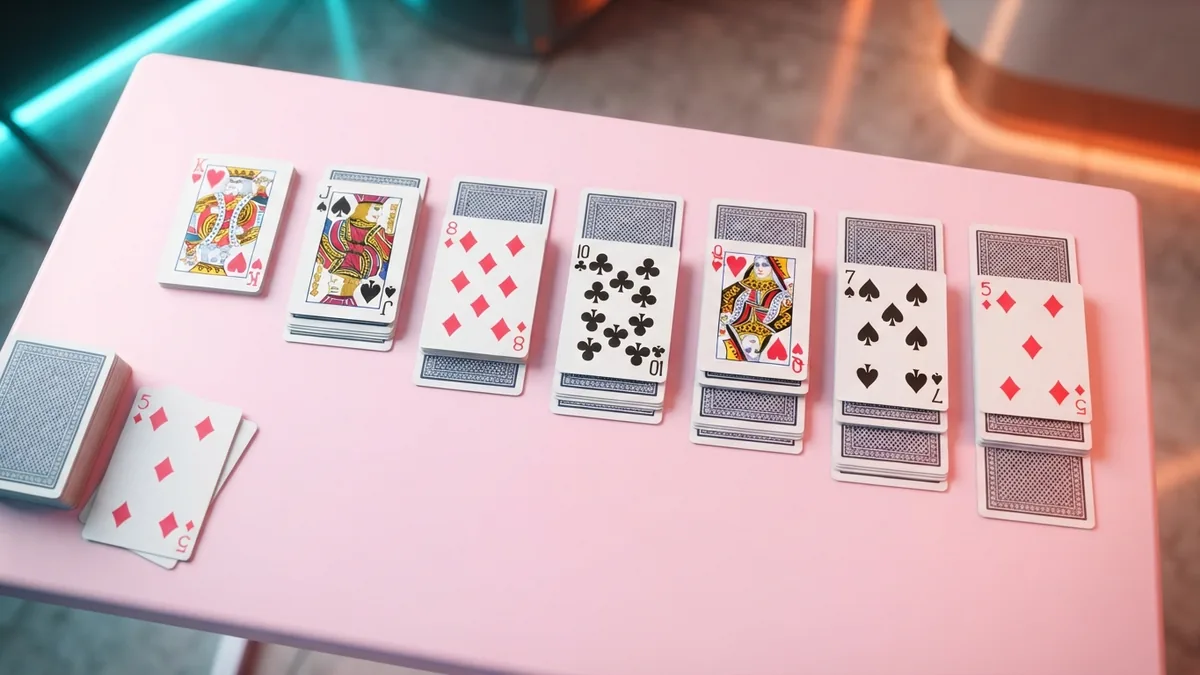
If you are asking, “how do i deal solitaire,” deal the tableau one card at a time. Start at the left and move right. On the first pass, place one card face down in each of the seven positions.
For the next pass, skip the first pile. Place one face-down card on each pile from the second through the seventh. Turn the new top card of the seventh pile face up. Repeat the pattern, starting one pile farther right each time.
- Deal one card to each of seven positions.
- Deal to piles two through seven, then turn the seventh pile’s top card face up.
- Deal to piles three through seven, then turn the seventh pile’s top card face up.
- Continue until the seventh pile receives its seventh card.
- Check that each pile’s top card is face up.
- Place the remaining 24 cards face down as the stock.
This method creates the correct layout for a Solitaire card game. You can also deal each pile in full, one pile at a time. Count carefully, and turn only the final card in each pile face up.
How many cards to deal in Solitaire? Deal 28 cards into the tableau, then keep the other 24 in the stock. The seven tableau piles hold one, two, three, four, five, six, and seven cards.
Now you know how to deal Solitaire with cards. Check the pile counts before play. If one pile has the wrong number, gather the cards and deal again.
Important Rules for Dealing and Moving Cards
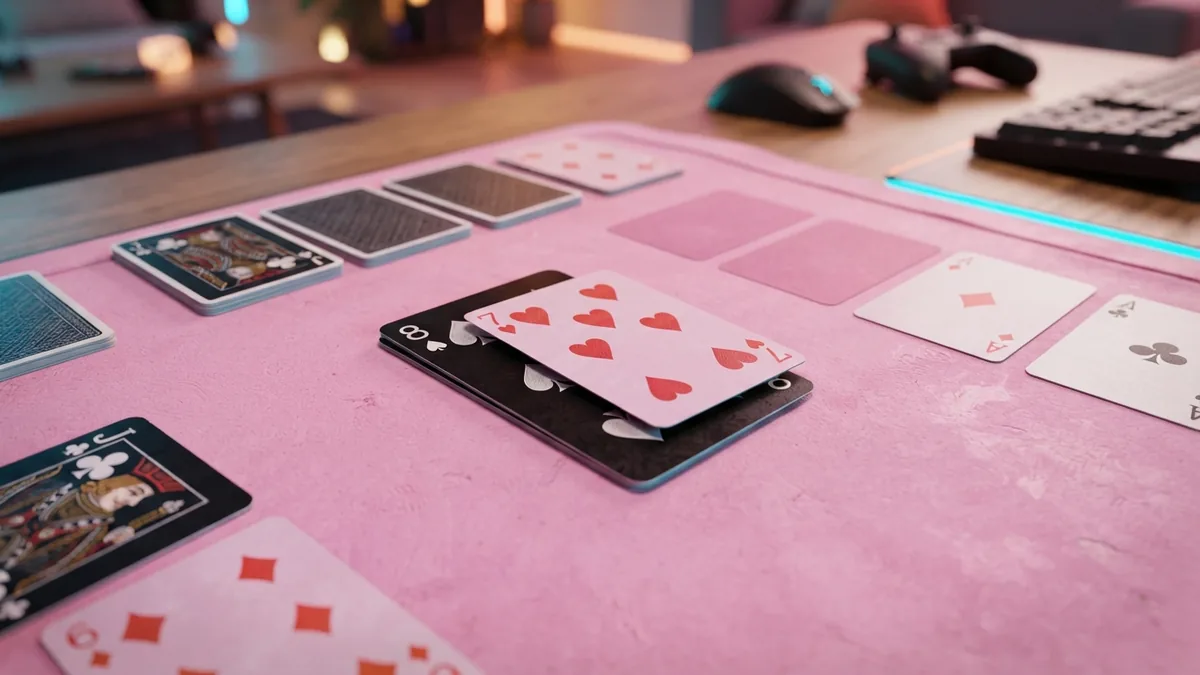
In classic Klondike, a face-up tableau card can move onto a card one rank higher and of the opposite color. For example, place a black six on a red seven. Keep building downward in alternating colors.
You may move a valid face-up sequence as one group. When a move uncovers a face-down card, turn that card face up. Only a King can fill an empty tableau slot. You may move a King alone or lead a valid sequence with one.
Move an Ace to an empty foundation space when one becomes available. Add cards of the same suit in order, from Ace to King. Do not start a foundation with any other rank.
To use the stock, turn its top card face up and place it on the waste pile. You may move that card to the tableau or a foundation if the move follows the rules. Some versions let you draw one card at a time; others let you draw three.
Stock passes also vary by house rule. Some games allow you to turn through the stock again and again. Others limit how many passes you may take. Agree on that rule before you start, since it changes the game.
| Move | Rule |
|---|---|
| Tableau to tableau | Place a lower card of the opposite color. |
| Empty tableau slot | Place a King or a valid sequence led by a King. |
| Foundation | Start with an Ace and build upward by suit. |
| Stock to waste | Turn the stock’s top card face up for play. |
These rules explain how to deal cards for Solitaire and play the standard version. Different Solitaire variants use other layouts. Do not apply Klondike’s card counts to every game.
Common Dealing Mistakes to Avoid

A common error is turning over every card in the tableau. At the start, only one card per pile should be face up. Keep the rest hidden until play reveals them.
Another mistake is dealing seven cards into every pile. The piles must hold one through seven cards, not seven each. Count the tableau total: it should be 28 cards.
- Use one 52-card deck, with no jokers.
- Deal one through seven cards across the tableau piles.
- Turn up only the top card of each pile.
- Keep the other 24 cards in the stock.
- Do not fill an empty tableau slot with a Queen or lower card.
- Set stock and waste rules before the first turn.
Check your deck for missing or extra cards. A wrong card count can spoil the layout or leave you short of cards. A quick count can save you from dealing again.
One more point: “how do you deal out Solitaire” depends on the version. Classic Klondike uses seven piles. Spider Solitaire and FreeCell use different layouts.
Tips for a Stronger Start
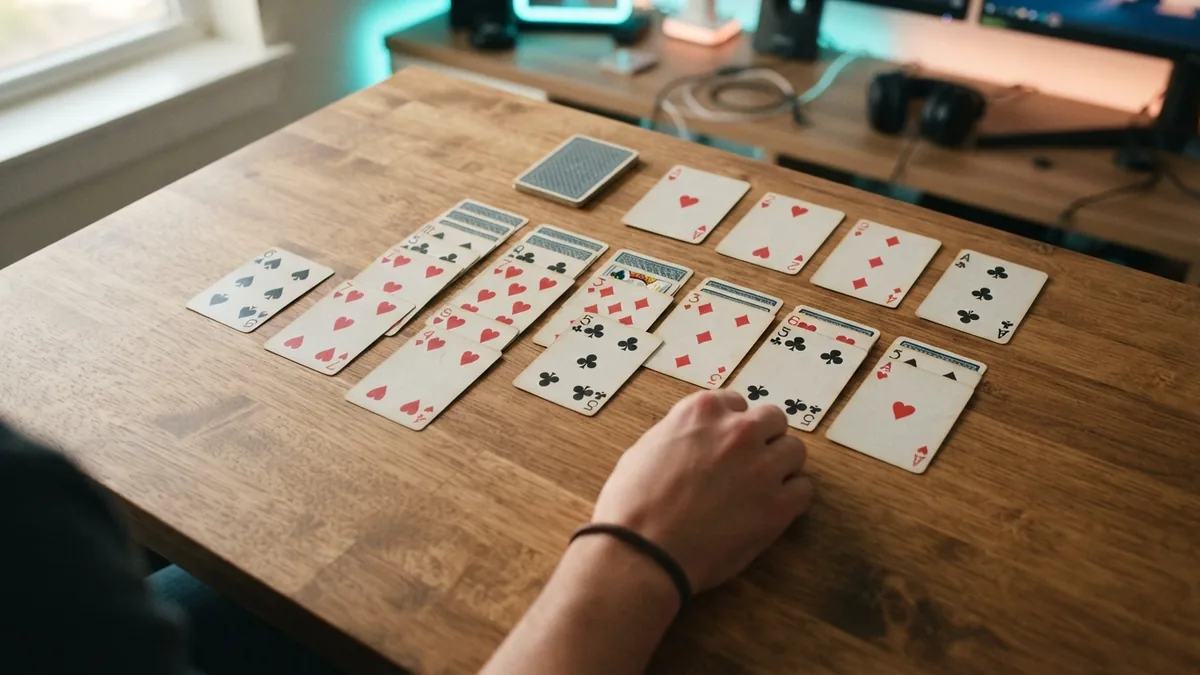
Before making your first move, look for Aces and low cards. They can start foundation piles or help build a sequence. Then check which move can uncover a face-down card.
Uncovering hidden cards often gives you more options. Do not move a card just because it can move. Think about which card it will expose and whether that helps clear a pile.
Use empty spaces with care. A King can fill one, but it may block another useful move. Check the face-down cards beneath the King’s destination before shifting it.
Keep the waste pile in view. A card there may become useful after a tableau move. If it cannot move now, draw again only when the stock rules allow it.
For people asking how to deal Spider Solitaire, the standard game uses two decks and ten tableau piles. Its layout and face-up cards differ by version, so follow Spider-specific rules. FreeCell is different again: it uses one deck and begins with all cards face up across eight columns.
So, how to deal FreeCell? Shuffle one deck, then deal all 52 cards face up into eight columns. Four columns receive seven cards, and four receive six. FreeCell has no stock pile or waste pile.
When someone asks how to deal for Solitaire, first confirm which version they mean. The classic seven-pile deal works for Klondike, not every patience game. For a solo game with real cards, make the layout, check the counts, and begin.