Introduction to Patience
Patience is a family of card games usually played alone. In the United States and Canada, many players call it Solitaire. Klondike is one of its best-known forms.
If you wonder how do you play patience with cards, start with Klondike. Your goal is to move all 52 cards into four foundation piles. Build each pile by suit, from ace to king.
The game blends luck with choice. You cannot choose the next stock card, but you can choose which cards to move. Good moves often reveal hidden cards or open a useful column.
You can play with a physical deck or on a phone, tablet, or computer. The basic rules stay much the same. Digital games may offer hints, undo, and different draw rules.
Setting Up the Game
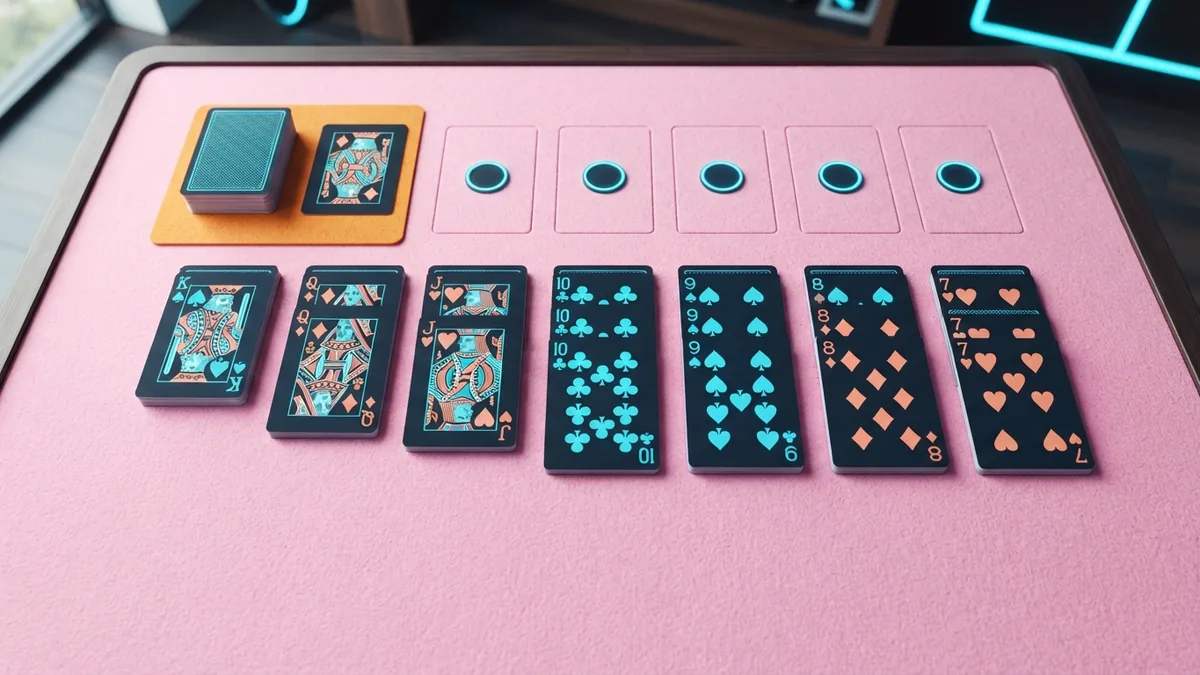
Use one standard pack of 52 cards, with the jokers removed. Shuffle the cards, then deal seven columns from left to right. These columns form the tableau.
Place one face-up card in the first column. Deal one face-down card to each of the next six columns. On the next pass, deal a face-up card to the second column. Deal one face-down card to each column after it.
Repeat this pattern until the seventh column has seven cards. Each column should have one face-up card on top. The first column has one card, and the last has seven.
Set the 24 cards left over face down beside the tableau. This stack is the stock. Leave room for four foundations and a waste pile. Cards turned from the stock go to the waste pile.
- Tableau: Seven columns with 28 cards in all.
- Stock: The 24 cards left after the deal.
- Waste: Cards turned over from the stock.
- Foundations: Four piles built by suit, from ace to king.
Check the layout before you start. Only the top card in each tableau column should face up. Keep all other cards face down until you uncover them.

Basic Rules of Patience
In the tableau, stack cards in descending order and alternate red and black. For example, put a black nine on a red ten. Then put a red eight on the black nine.
The suits do not need to match in tableau stacks. You can move one face-up card or a full face-up run. Place it on a card one rank higher and of the other color.
When a move uncovers a face-down card, turn that card face up. It may give you a new move. An empty column can hold a king or a valid run that starts with a king.
Move an ace to an open foundation when you can. Build that suit upward in order: two, three, four, and so on, ending with the king. Each foundation holds one suit.
When no useful tableau move remains, turn cards from the stock. In draw-one play, turn over one card at a time. Move the top waste card to a tableau column or foundation when it fits.
When the stock runs out, turn the waste pile over to make a new stock. Some versions limit how often you can do this. Agree on a rule before play, or check the digital game’s settings.
You win when all 52 cards reach the four foundations. Some deals cannot be won, even with careful play. That is part of the game.
Winning Strategies for Patience
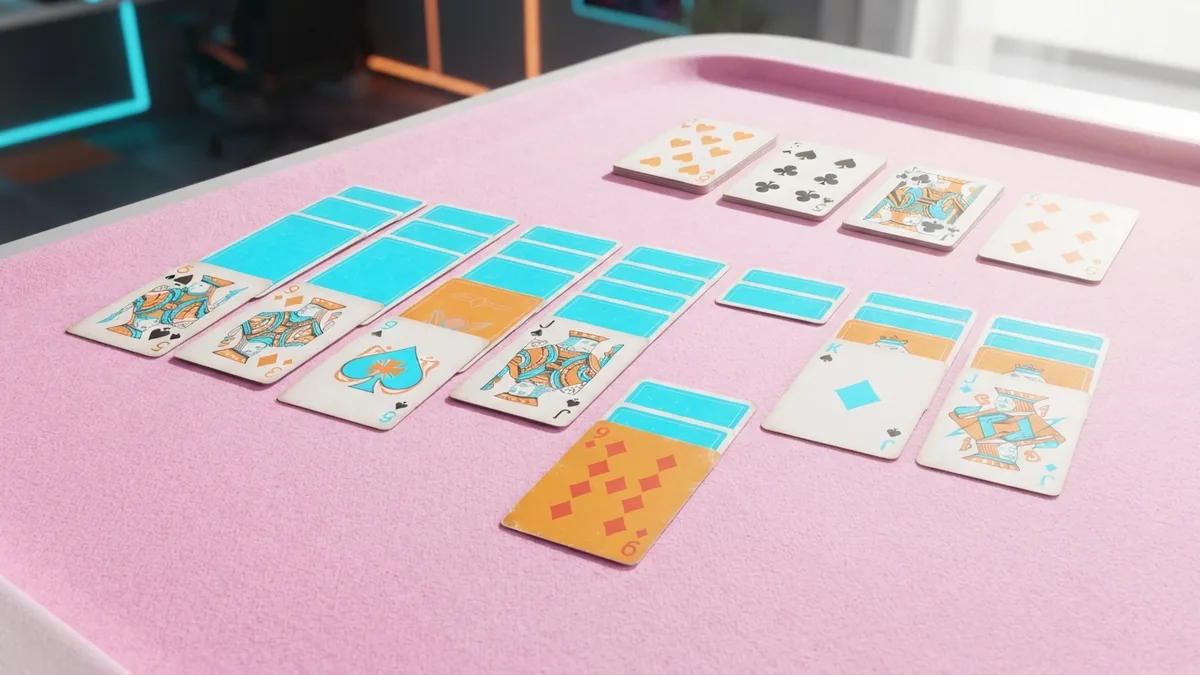
Look for moves that uncover face-down cards. A newly shown card might open a stack or reveal an ace. When two moves seem equal, choose the one that exposes more hidden cards.
Do not rush every low card to a foundation. A red four may help by sitting on a black five in the tableau. Moving it too soon could block a useful sequence.
Use empty columns with care. Only kings can start a new stack there. Before moving a king, check whether it uncovers cards or helps build a useful run.
- Scan all seven columns before drawing from the stock.
- Favor moves that reveal hidden cards.
- Keep low cards in the tableau when they help a stack.
- Save open columns for kings that improve your layout.
- Think about what each move reveals and what it blocks.
Plan at least one move ahead. A red six may fit on a black seven, but that move could block another card. Consider what you gain before you move it.
Stock order matters, too. If a tableau move can uncover a card, try it before drawing. In draw-three play, note which cards appear together and which card stays on top.

Patience Variations: Klondike and Clock
Klondike is the version described above. It uses seven tableau columns, a stock, a waste pile, and four foundations. Draw-one play is often easier to follow than draw-three play.
Clock Patience has a different layout and offers few choices. Deal 13 piles: one for each hour on a clock, plus one in the center. Put four face-down cards in each pile.
Turn over the top card from the center pile. Place it face up beneath the clock pile that matches its rank. Treat jack as 11, queen as 12, and king as the center pile. Then turn over the top card of that pile and repeat.
Keep going until all cards are face up, or a king appears when you must continue from the center. You win if every card is revealed. This game is often called Clock Solitaire, and it relies more on luck than planning.
Other patience games use different layouts and rules. Do not assume that a rule from Klondike applies to every version. Check the instructions for the specific game you choose.
Tips for Playing Patience
Take a moment to scan the whole tableau before each stock draw. A move in one column may uncover a card that changes your best choice elsewhere. This habit helps you avoid missing simple plays.
Learn the rules for the draw style you use. Draw-one reveals one card at a time, while draw-three turns over three cards. The top card in the waste pile is the one you can play.
Use undo as a learning aid in digital games, not just as a way to chase a win. Review what changed after each move. With a physical deck, you can pause and inspect the layout before acting.
There is no need to force a move. Some deals leave no path to a win, and Clock Patience can end through chance. Enjoy the puzzle, whether you play online or with cards on a table.