What Is Solitaire?
Solitaire is a card game for one player. Klondike is the version most people mean when they say Solitaire. The aim is to move every card into four foundation piles, sorted by suit from ace to king.
If you are wondering how to set up the card game solitaire, start with a standard deck of 52 cards. Remove the jokers and shuffle the deck. You will use part of the deck to form the tableau. The rest becomes the stockpile.
The tableau is the main play area. Its seven columns hold cards in a set pattern, with only the last card in each column face up. During play, build columns down by rank and switch between red and black cards. A tidy layout makes the rules easier to follow.
- Use one shuffled deck of 52 cards.
- Deal seven columns with one through seven cards.
- Turn up only the last card in each column.
- Leave room for four foundations, the stockpile, and waste pile.
Basic Equipment and Table Space
A standard deck has four suits: hearts, diamonds, clubs, and spades. Hearts and diamonds are red. Clubs and spades are black. Check the deck before dealing, since missing cards can make a game hard to finish.
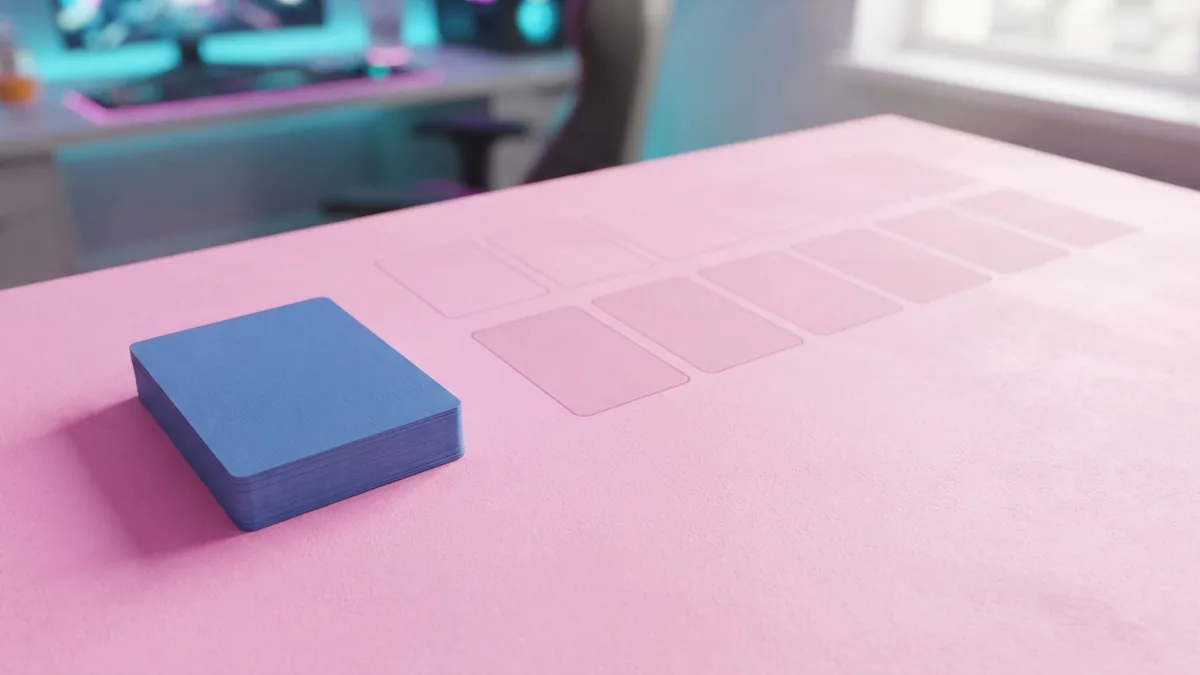
Choose a flat surface that can hold seven columns side by side. Leave space below each column, since cards may move there as you play. Put the foundations above or beside the tableau. Their position does not change the rules.
Set the stockpile near the tableau, with a clear space beside it for the waste pile. You will draw cards from the stock and place them face up in the waste. Keep enough space around each stack to lift cards without shifting the layout.
Good spacing helps you see each card. It also makes it easier to spot a face-down card that can be turned over. Beginners often find that clear piles matter more than a large table.
How to Deal the Solitaire Layout
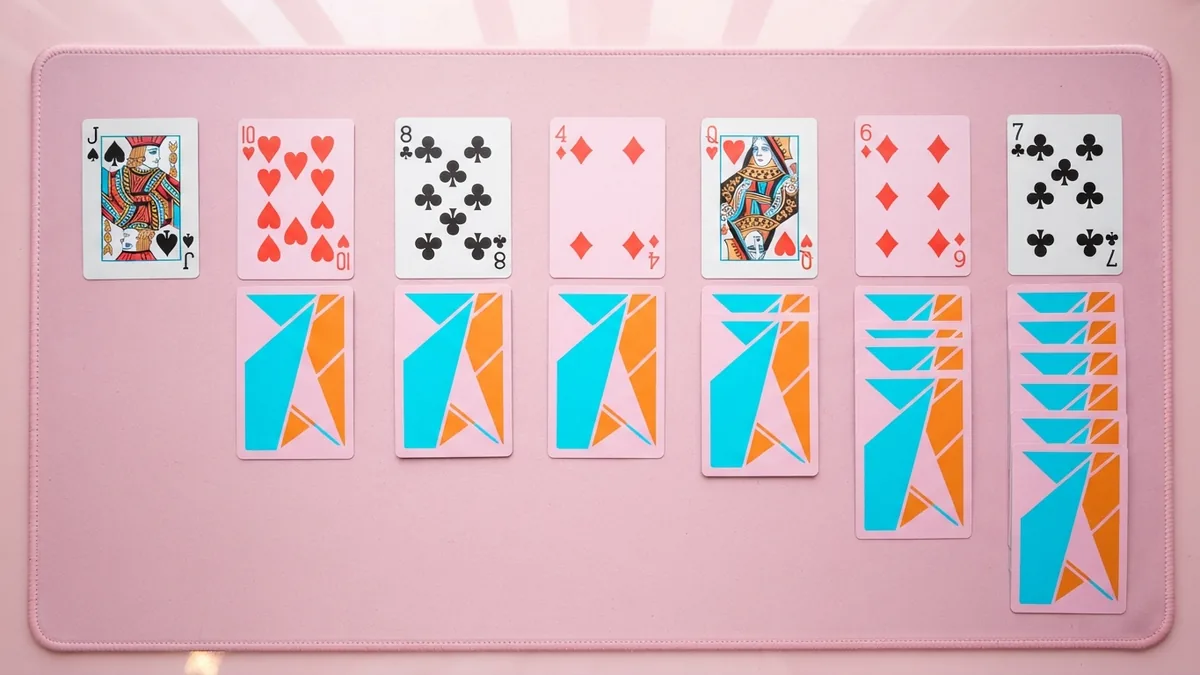
To learn how do you set up a game of solitaire, deal the tableau from left to right. The first column gets one card, the second gets two, and each next column gets one more. The seventh column gets seven cards.
Deal each column face down, then turn its last card face up. Only that top card should show in each column. The first column has one face-up card. The second has one face-up card above one hidden card, and so on.
- Deal one face-down card to the first column. Turn it face up.
- Deal one face-down card to columns two through seven.
- Deal a new row to columns two through seven. Turn the last card in column two face up.
- Start each next row one column farther to the right.
- Finish with seven cards in column seven. Turn its last card face up.
Count the tableau cards to check your deal. The columns contain 1, 2, 3, 4, 5, 6, and 7 cards. Together, they use 28 cards. The remaining 24 cards form the face-down stockpile.
Place the stockpile beside the tableau and leave room for the waste pile. Do not turn over stock cards yet. Now you know how to set up a game of solitaire in the usual Klondike style.
Understanding the Tableau and Foundations
In the tableau, place a face-up card on another card if it is one rank lower and the opposite color. For example, put a black seven on a red eight. A red jack can go on a black queen.
When you move the last face-up card from a column, turn over the hidden card beneath it. If a column becomes empty, you may place a king there. You can also move a face-up stack that starts with a king into that space.
The four foundations start empty, with one pile for each suit. Move an ace to begin a foundation. Then add cards of the same suit in order, from two through king. The aim is to build all four suits completely.
The stockpile holds cards that were not dealt into the tableau. Draw from it when you need more options. Place drawn cards face up in the waste pile. You can play the exposed waste card if it fits a foundation or tableau move.
Some Klondike games turn over one stock card at a time. Others turn over three. Agree on the draw rule before you begin, since it changes how often you can reach cards. The tableau deal stays the same.
Common Setup Mistakes to Avoid
A common mistake is turning up more than one card in a column. At the start, only the last card dealt into each column should be face up. If you reveal extra cards, turn them down before play begins.
Another mistake is dealing the wrong number of cards. The columns must contain one card in the first pile and seven in the last. Count all 28 tableau cards before you set the rest aside.
Do not mix up the stockpile and waste pile. The stock begins face down. Cards move to the waste only after you draw them. Keep those piles apart so you can tell which cards remain unseen.
Some players also place a card on a tableau pile by rank but forget the color rule. Red cards must alternate with black cards as you build down. Check both rank and color before moving a card.
How Spider Solitaire Setup Differs
Spider Solitaire uses a different layout, so do not use the Klondike deal. A standard Spider game uses two decks, or 104 cards. Deal ten columns across the table. The first four columns get six cards each, while the other six get five cards each.
Turn only the top card of each column face up. The other 50 cards form the stockpile. Keep the stock separate, since you will deal from it during play. Spider has no four starting foundations like Klondike.
To answer how to set up a game of spider solitaire, first choose the number of suits. One-suit and two-suit games use the same basic layout, but use fewer suits in the deck. Four-suit Spider uses all four suits and is more demanding.
Spider players build cards down in rank within the tableau. A full same-suit run from king to ace can be removed from play. When a column is empty, any card or valid stack may fill it. These rules differ from Klondike, so label the game before dealing.
Start Your Game with a Clean Deal
For Klondike, the key steps are simple: shuffle one deck, deal seven columns, and turn up one card in each. Set the other 24 cards face down as the stockpile. Leave clear spots for the waste and four foundations.
Check the card count and face-up cards before your first move. This quick check prevents most setup errors. Once the layout is right, build down by alternating colors and send each suit to its foundation from ace to king.
If you chose Spider, use two decks and ten columns instead. Its layout and suit rules differ from Klondike. Knowing which version you are playing is the first step to a fair game.