What Is Solitaire?
Solitaire is a card game for one player. Many people play it alone at home or during a quiet break in daily life. The best-known version is Klondike, which uses one standard deck of 52 cards.
If you ask, “how do I set up solitaire?” you need a deck, a flat surface, and room for several piles. Remove the jokers and shuffle the cards well. The aim is to move every card to four suit piles called foundations.
Setup is quick once you know where each pile goes. You do not need a special board or extra pieces. Leave enough space to turn cards and move them between columns.
- One standard deck of 52 cards, with jokers removed
- Room for seven tableau columns and a stock pile
- Space for a waste pile and four foundations
Klondike is a solo game, but it also works well beside other players. Each person can use a separate deck and compare results. The layout and rules stay the same.
Understanding the Klondike Version
Klondike is the most common form of solitaire. Its starting layout has seven columns, known as the tableau. Cards in these columns help you uncover hidden cards and build runs.
The stock is the face-down draw pile left after the deal. Cards turned from it go face up into the waste pile. You may play the top waste card when it fits a legal move.
Four empty foundations sit above the tableau. Each one holds a single suit. Build each pile from Ace upward, through 2 and the other ranks, ending with King.
Tableau cards follow a different order. Stack them from high rank to low rank, while switching between red and black suits. For example, place a black 9 on a red 10.
- Tableau: Seven columns used for most card moves
- Stock: The face-down draw pile
- Waste: Cards turned from the stock
- Foundations: Four suit piles built from Ace to King
There are two common ways to draw from the stock. In one-card play, turn over one card at a time. In three-card play, turn over three cards, but play only the top one.
How to Set Up the Game
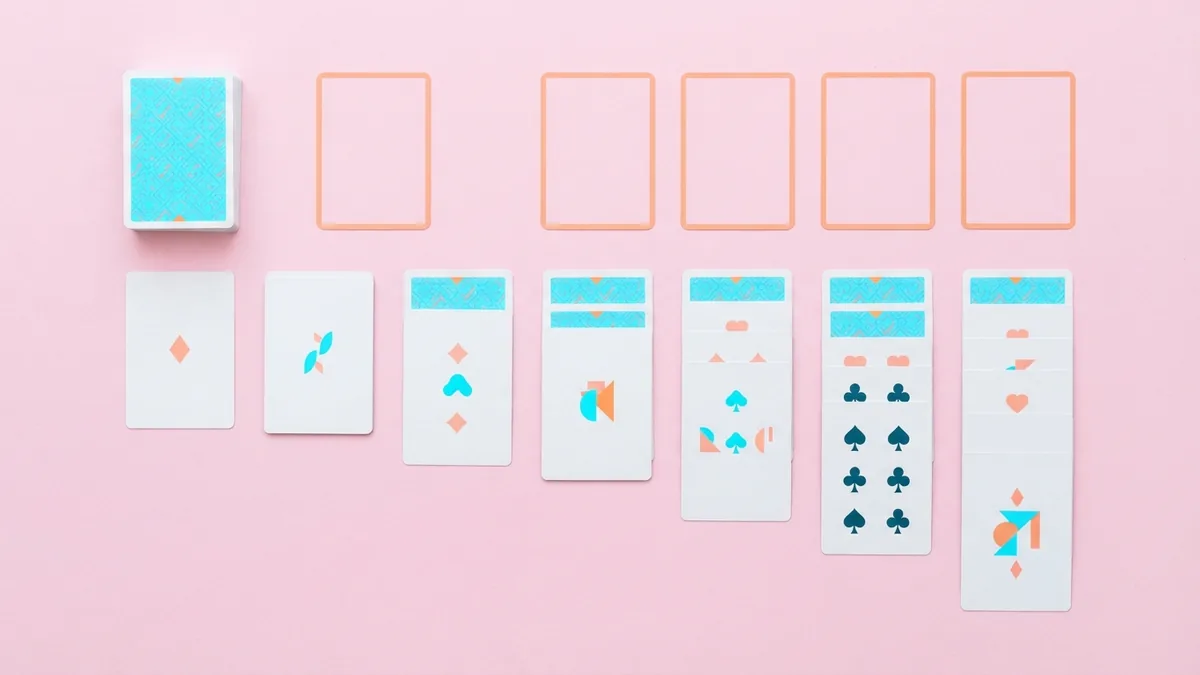
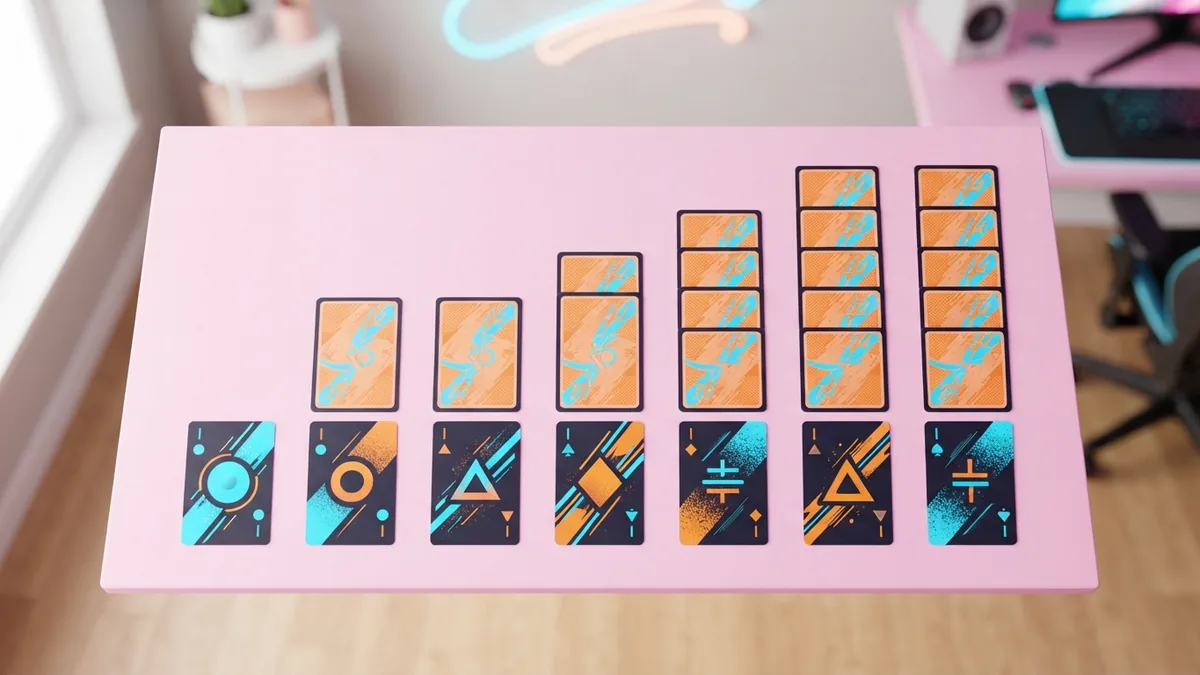
To learn how to set up a solitaire card game, first shuffle one deck without jokers. Deal seven columns from left to right. Give the first column one card, the second two, and keep adding one card per column.
Keep all cards face down during the deal. Once each column is complete, turn over its top card. The tableau now holds 28 cards, with one visible card in each column.
The remaining 24 cards form the stock. Place them face down beside the tableau. Leave a nearby space for the waste pile, then leave room above the columns for four foundations.
- Shuffle a standard 52-card deck.
- Deal seven columns, with one more card in each new column.
- Turn the top card of every column face up.
- Set the 24 undealt cards face down as the stock.
- Leave spaces for the waste pile and four foundations.
Check your layout before play. Each column should hold one more card than the column before it. Only the top card should be face up.
This is how to set up solitaire with cards in the classic layout. It also answers how to set up solitaire with one deck of cards. Keep the stock and foundation spaces clear so you can move cards easily.
Playing Solitaire
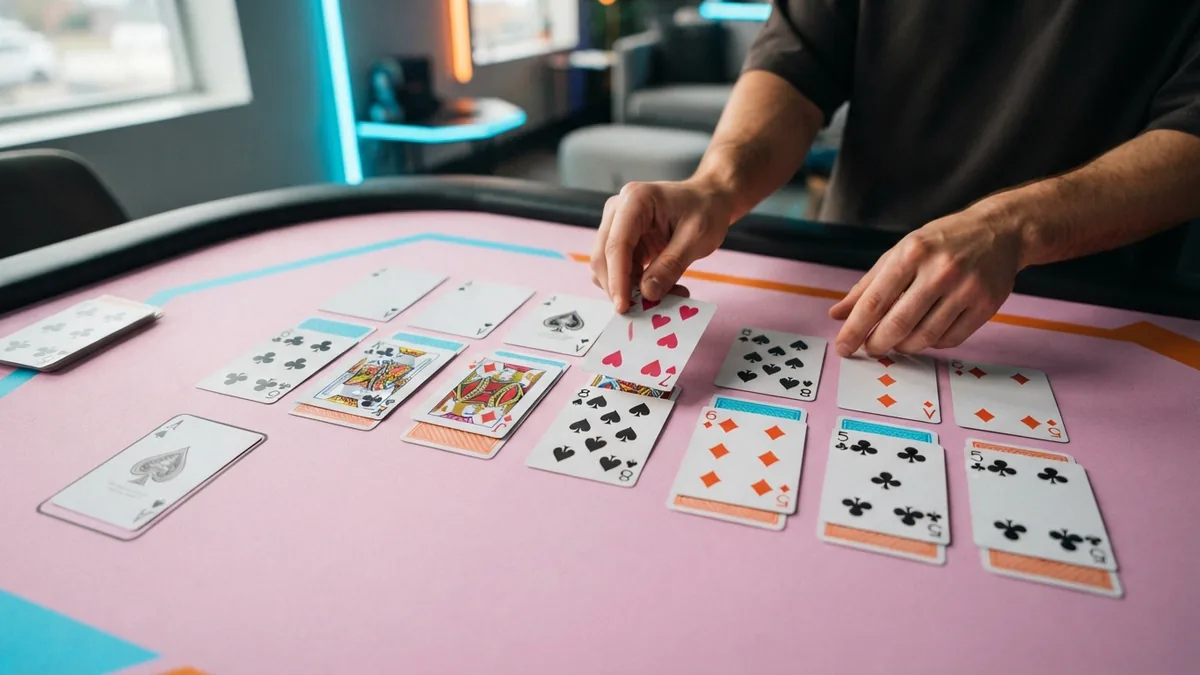
Start by checking the face-up cards for an Ace. Move an Ace to an empty foundation when possible. Then look for tableau moves that follow the descending, alternating-color rule.
A red 8 can go on a black 9. You may move a whole face-up run when its ranks descend and its colors alternate. The card beneath the run must be one rank higher and the other color.
When you move a card and uncover a face-down card, turn it over. That new card may open another move. An empty tableau column can hold a King, or a face-up run that starts with a King.
Draw from the stock when no useful tableau move is open. In one-card play, turn over one card. In three-card play, turn over three, then check whether the top waste card can be played.
When the stock is empty, many players turn the waste pile over to make a new stock. Rules differ on how often you may do this. Agree on the rule before you begin.
In short, how to set up and play solitaire comes down to a clear layout and legal moves. Deal the columns, place the stock, and build the foundations as cards become available. Take time to check the tableau before each draw.
Winning Strategies
Favor moves that uncover face-down cards. A hidden card can reveal an Ace, a useful King, or a card that starts a new run. Moves that only shift cards already in view may offer less help.
Think before you empty a tableau column. An empty space can only take a King or a run led by a King. Use that space when it helps uncover cards or move a blocked sequence.
Do not rush every low card to a foundation. A 2 or 3 may still help you build a tableau run. Keep it there if moving it would block a needed card.
In three-card play, track the waste pile order. A useful card may sit below two others, so one draw may not reach it. Plan moves around what will become available next.
There is no single move that wins every deal. Make choices that reveal cards and preserve options. A little patience can prevent a useful card from getting stuck.

Other Solitaire Variations
Klondike is not the only way to play. Spider solitaire uses two decks, or 104 cards, in its common form. It begins with ten tableau columns, and players build runs in descending order.
To answer how do you set up Spider solitaire, deal 54 cards across ten columns. Put six cards in each of the first four columns and five in each of the remaining six. Turn only the top card in every column face up, then set the other 50 cards aside as the stock.
Spider has its own rules for suits and completed runs. One-suit games are easier to learn, while four-suit games add more challenge. So how to set up a Spider Solitaire game depends on the number of suits you plan to use, not the Klondike layout.
Pyramid and TriPeaks use different layouts again. Pyramid arranges cards in overlapping rows that form a triangle. TriPeaks deals three small peaks, with cards removed by matching ranks next to the waste card.
Choose a version based on the sort of puzzle you enjoy. For classic one-deck play, Klondike is the right setup to learn first. The other layouts have separate rules and card counts.