Introduction to Chess
Chess is a two-player game played on a board with 64 squares. The squares form eight rows and eight columns. Each player begins with 16 pieces.
Your goal is to checkmate the other player’s King. Checkmate means the King is under attack and has no legal way to escape. White moves first, then players take turns moving one piece.
If you are learning how to play chess, start with the rules for each piece. Then learn how to spot threats and keep your King safe. You do not need to memorize openings before your first game.
Chess rewards careful thought, but you can learn it one move at a time. Start with a simple plan: bring pieces into play, watch your opponent, and avoid giving away pieces for free.
Setting Up the Chessboard
Place the board between the players with a light square in each player’s right-hand corner. Each side uses the two rows nearest them. The pieces face one another across the board.
Set up the back row in this order, from left to right: Rook, Knight, Bishop, Queen, King, Bishop, Knight, Rook. The Queen starts on a square of her own color. Put all eight Pawns in the row ahead of the back row.
Check the setup before the game begins. Each player needs one King, one Queen, two Rooks, two Knights, two Bishops, and eight Pawns. If the Queen and King switch places, the game starts with an incorrect setup.
- Put a light square on each player’s right.
- Place one Rook in each corner.
- Set the Queen on her matching-color square.
- Place the Pawns in the row ahead of the other pieces.
The FIDE Laws of Chess cover standard play and special moves. Check them if you need the full rule for a less common case.
Basic Rules of Chess
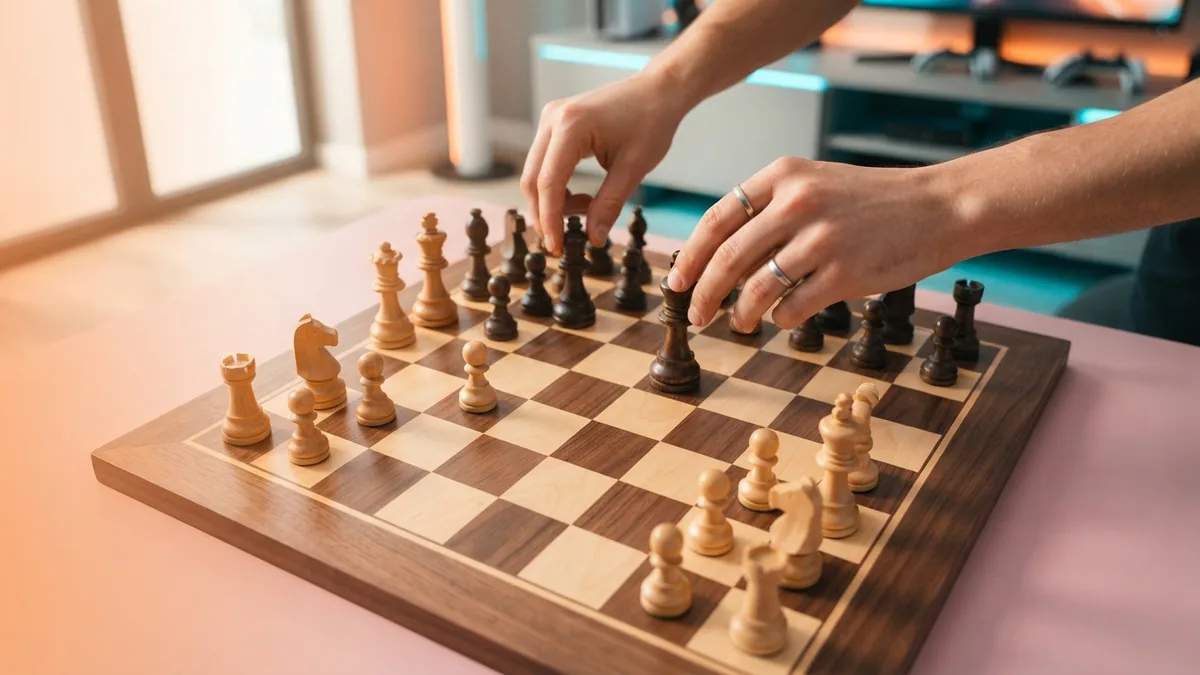
On your turn, move one piece to a legal square. You may capture an enemy piece by moving onto its square. Remove the captured piece from the board. You cannot move onto a square occupied by your own piece.
Your King is in check when an enemy piece attacks it. You must end that threat with your next move. You can move the King, capture the attacker, or block the attack when possible.
Checkmate ends the game. The King is in check, and no legal move can stop the attack. Stalemate is a draw. It occurs when a player has no legal moves but their King is not in check.
Three special rules can change a move. Castling moves the King and a Rook together when neither has moved and the path is clear. The King also cannot castle through check or while in check.
En passant lets a Pawn capture an opposing Pawn just after it moves two squares past. Pawn promotion happens when a Pawn reaches the far edge of the board. It becomes a Queen, Rook, Bishop, or Knight, usually a Queen.
How the Chess Pieces Move
Every kind of piece moves in its own way. Rooks move any number of clear squares along a row or column. Bishops move along clear diagonals. Queens can move like either a Rook or a Bishop.
Knights move two squares in one direction and then one square to the side. This makes an L shape. Knights can jump over other pieces. A King moves one square in any direction, but cannot move onto an attacked square.
Pawns move forward one square into an empty space. On its first move, a Pawn may move two squares if both spaces are clear. Pawns capture one square diagonally forward, not straight ahead.
Piece values can help you judge a trade. A common rough guide counts a Pawn as one point, a Knight or Bishop as three, a Rook as five, and a Queen as nine. These numbers are not rules. A strong position or a safe King can matter more than points.
- Rook: moves along rows and columns.
- Bishop: moves along diagonals.
- Queen: moves like a Rook or Bishop.
- Knight: jumps in an L shape.
- King: moves one square in any direction.
- Pawn: moves forward and captures diagonally.
Chess Strategy for Beginners
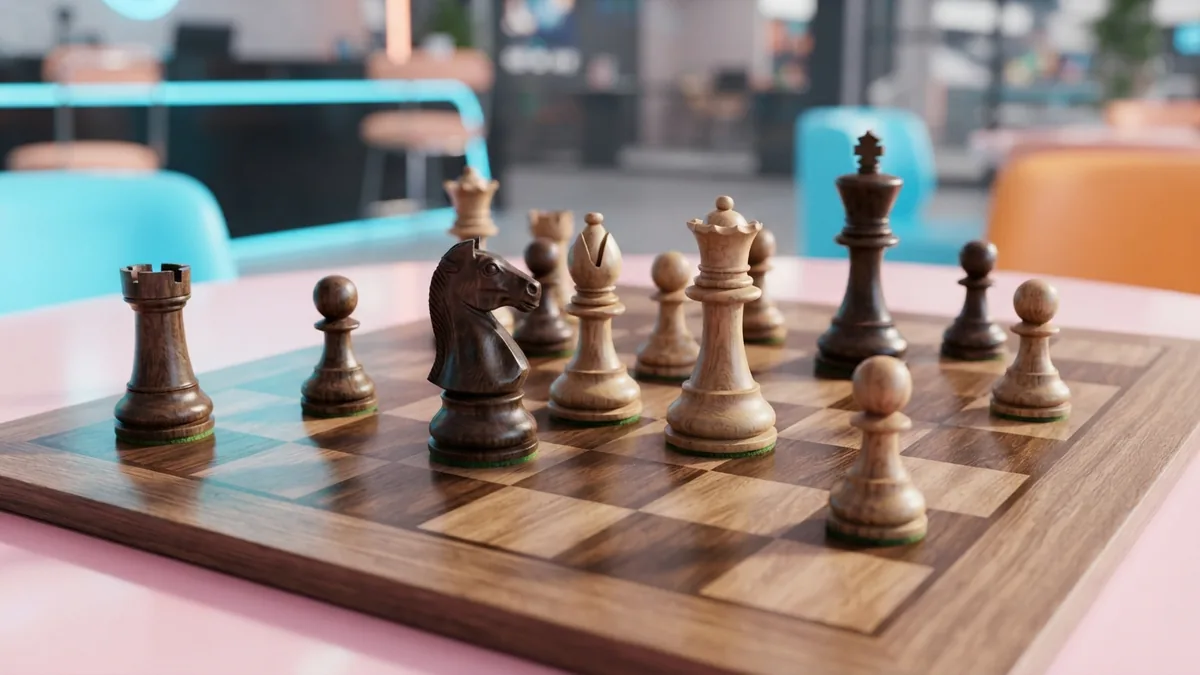
Chess strategy for beginners starts with three aims: control the center, develop pieces, and protect your King. The central squares give pieces more room to move. A Pawn move can also open paths for your Bishops and Queen.
Bring your Knights and Bishops out early. Avoid moving the same piece again while others remain at home. Castle when it is safe and legal. Castling can protect your King and bring a Rook closer to the center.
Before each move, ask what your opponent’s last move attacks. Check for threats to your King and pieces that lack protection. This short pause can prevent a simple loss.
- Look for checks, captures, and threats for both sides.
- Do not leave a piece open to capture without a reason.
- Bring minor pieces out before sending the Queen forward.
- Trade pieces when the exchange helps your position.
Basic chess tactics can help you win material. A fork attacks two targets at once. A pin makes a piece hard to move because a valuable piece sits behind it. A skewer attacks the valuable piece first, then targets the piece behind it.
Improving Your Game
Practice is the best way to make the rules feel natural. Play against friends, a club partner, or an online chess opponent. Choose games at a pace that gives you time to think.
After each game, review a few key moments. Ask where you lost a piece, missed a threat, or made a strong choice. Looking at your own decisions helps more than replaying a game without a goal.
Learn basic chess notation when you feel ready. Notation records moves with letters and numbers, so you can follow a game or save your own. You can then study a position without setting up every move from memory.
Set one small goal for each game. You might aim to castle early, keep pieces defended, or spot an opponent’s threat. Small goals make learning chess less daunting and give you a clear focus.
Resources for Learning Chess
A beginner book, chess club, or trusted online lesson can help explain rules and plans. Pick one topic at a time, such as piece movement or checkmate patterns. Then try the idea in a game.
Chess puzzles are useful for practicing checks, captures, and threats. Solve each puzzle by looking for forcing moves first. These are moves that limit the opponent’s choices, such as a check or a direct capture.
Online games can offer quick practice, while in-person games help you learn from other players. Try both if you can. Choose opponents who match your skill level, so you can learn without feeling rushed.
Keep a simple record of what you want to improve. After several games, look for a pattern in your mistakes. Work on that one habit before adding more study topics.