Game Objective: Build a Winning Hand
Mah Jongg is a tile game usually played by four people. Players draw and discard tiles to build a hand that matches a valid pattern. When your tiles fit a winning hand, call “Mah Jongg” and show your tiles. The goal is simple to state, but the rules vary by game style.
In many traditional styles, a winning hand has four sets and one pair. A set can be three matching tiles or three suited tiles in order. American Mah Jongg works differently. Players match their tiles to patterns on the current National Mah Jongg League card.
If you are asking, “How do you play Mah Jongg?” first choose the version. Then learn its tile set, winning patterns, and claim rules. Do not mix rules from different styles without agreement.
- Sequence: Three suited tiles in order, such as 4, 5, and 6 Bams.
- Triplet: Three matching tiles, such as three 7 Dots.
- Pair: Two matching tiles.
Components and Setup
How many tiles in Mah Jongg depends on the version. A common traditional set has 136 tiles: three suits, Winds, and Dragons. Each suit has numbers 1 through 9, with four copies of each tile. The honor tiles include four Winds and three Dragons, also with four copies each.
American Mah Jongg sets often have 152 tiles. They add eight Flowers and eight Jokers to the 136-tile base set. So, how many tiles are used in American Mah Jongg? Most sets have 152, though players should check the rules for their group.
For four players, mix the tiles face down and build a wall. In many styles, each player starts with 13 tiles, while the dealer takes 14. Sort your tiles by suit and rank, and keep them hidden from other players.
Set up before you deal. Agree on the game style, scoring, and any house rules first.
- Choose a version and settle rule questions.
- Mix the tiles face down and build the wall.
- Deal 13 tiles to each player; the dealer takes one extra.
- Sort your hand without showing it to others.

Basic Gameplay: Draw, Meld, and Discard
On your turn, draw a tile from the wall, then discard one tile face up. Your hand returns to 13 tiles after the discard, unless you have won. Players keep taking turns until someone completes a legal hand or the wall runs out.
Players may claim a discard to complete a set, but claim rules depend on the version. In many traditional games, a player can claim for a triplet. A sequence claim is often limited to the player whose turn comes next. Put claimed sets face up; these are called exposed melds.
How to play American Mah Jongg starts with its own added steps. Players follow the current card and usually complete a Charleston, which is a set of tile exchanges before the turns begin. Joker use and exchange rules have limits. Learn the card and group rules before playing.
To learn how to play Mah Jongg tiles in a real hand, focus on one turn at a time. Draw, check whether a tile helps your hand, then discard. When your tiles match a legal pattern, call Mah Jongg and reveal them.
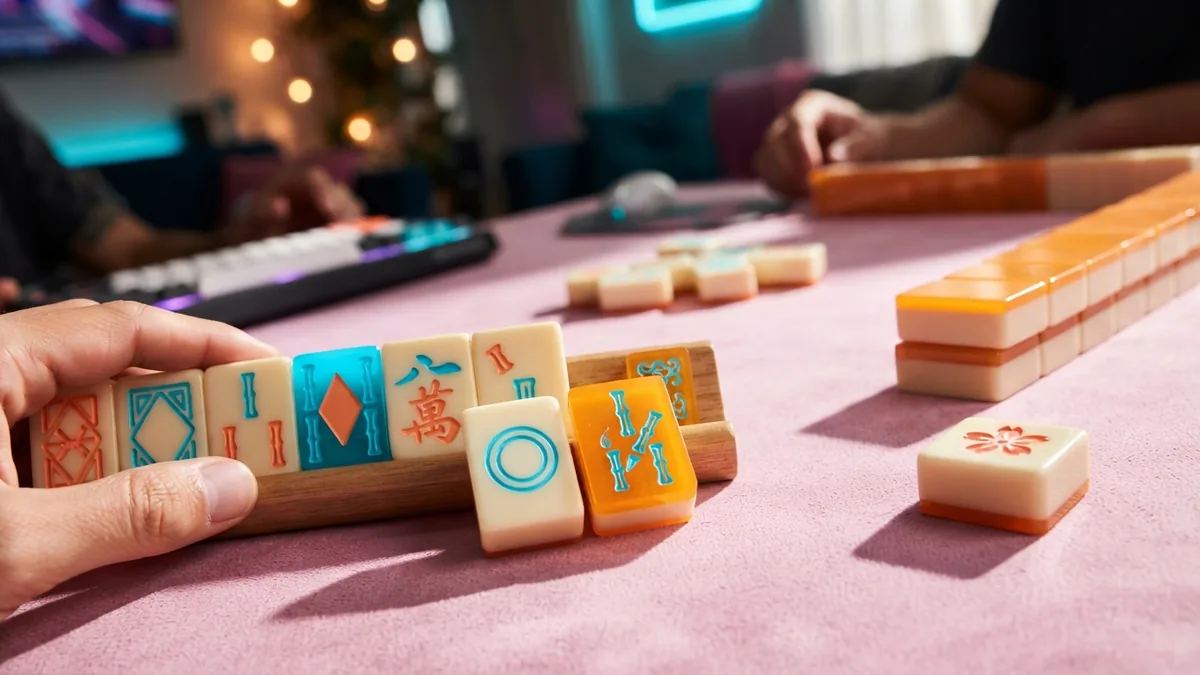
How to Play with Three Players
Three-player games exist, but there is no single rule set used by every group. If you want to know how to play Mah Jongg with 3 players, ask which version and house rules your table follows. Some groups use a three-player edition. Others change the tiles, wall, or turn order.
For three-handed American Mah Jongg, settle the rules before mixing tiles. Groups may differ on which tiles to remove and how to handle the Charleston. The National Mah Jongg League card sets hand patterns, but it does not make every local three-player rule the same.
Keep the turn order clear. Each player should know when to draw, discard, and claim. Write down unusual house rules for new players. This prevents disagreements once a hand is underway.
How to play American Mah Jongg with 3 players is therefore a group-rule question, not one fixed set of steps. Confirm your tile count and exchange rules before the first deal. Do the same for any three-player version.
Scoring in Mah Jongg
Scoring can vary widely across Mah Jongg styles. Some games give points based on the sets in a winning hand. Other groups use fixed payments or a simpler win-and-loss tally. American players often use the card to check the hand, then follow agreed scoring rules.
Agree on scoring before the first deal. Decide how exposed sets affect a score and whether a self-drawn win earns a bonus. Also settle what happens when the wall runs out. A short rule talk now can prevent a long pause later.
New players can keep scoring simple. First, focus on building a legal hand and learning the turn order. Add bonuses and side rules once everyone knows the basics.
Beginner Strategies and Common Questions
Sort your tiles as soon as you receive them. Look for pairs, short runs, and groups that may fit a winning pattern. In American play, compare your hand with the current card early. Pick a likely hand, but stay ready to change plans.
Discard tiles that do not support your plan. A lone honor tile may be hard to use, while a tile that fits several sets may be worth keeping. Watch the discards, too. Avoid giving an opponent a tile that could complete a visible or likely hand.
These steps make a useful beginner’s guide to Mah Jongg, but practice matters more than memorizing every rule at once. To teach Mah Jongg, start with the tile names, turn order, and one sample hand. Then explain claims and scoring after learners can follow a basic turn.
Learning how to play Mah Jongg takes time because each style has its own rules. Some players ask how to play National Mah Jongg; in common usage, that means learning American play with the National Mah Jongg League card. Check which card year and table rules your group uses.
- Choose one game style before learning its rules.
- Study the winning patterns before choosing a hand.
- Track discarded tiles and protect useful tiles.
- Ask about local rules before starting a three-player game.