Mahjong basics: tiles and the goal
Mahjong is a tile game that began in China in the late 1800s. It spread around the world, and each region shaped its own rules. Chinese, Japanese, and American Mahjong share some core ideas. Their hands, scoring, and special rules can differ.
If you wonder, “how do you play Mahjong?” start with the goal. Build a legal hand before the other players do. A common winning hand has four sets and one pair. A set is three or four related tiles, while a pair is two matching tiles.
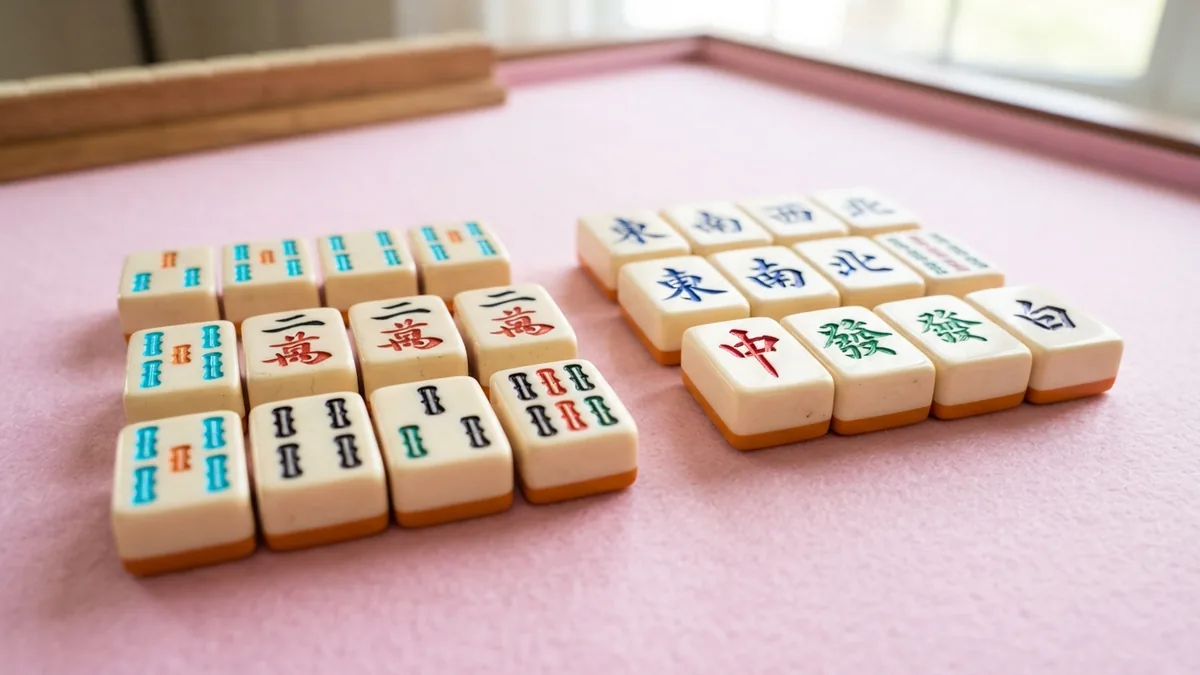
Most sets use 136 tiles, or 144 when flowers and seasons are added. The three suits are dots, bamboo, and characters. Each suit has numbers one through nine, with four copies of each tile. Winds and dragons are called honor tiles.
- Number tiles: Dots, bamboo, and characters, each numbered one through nine.
- Winds: East, South, West, and North.
- Dragons: Red, green, and white.
- Bonus tiles: Flowers and seasons, used in some rule sets.
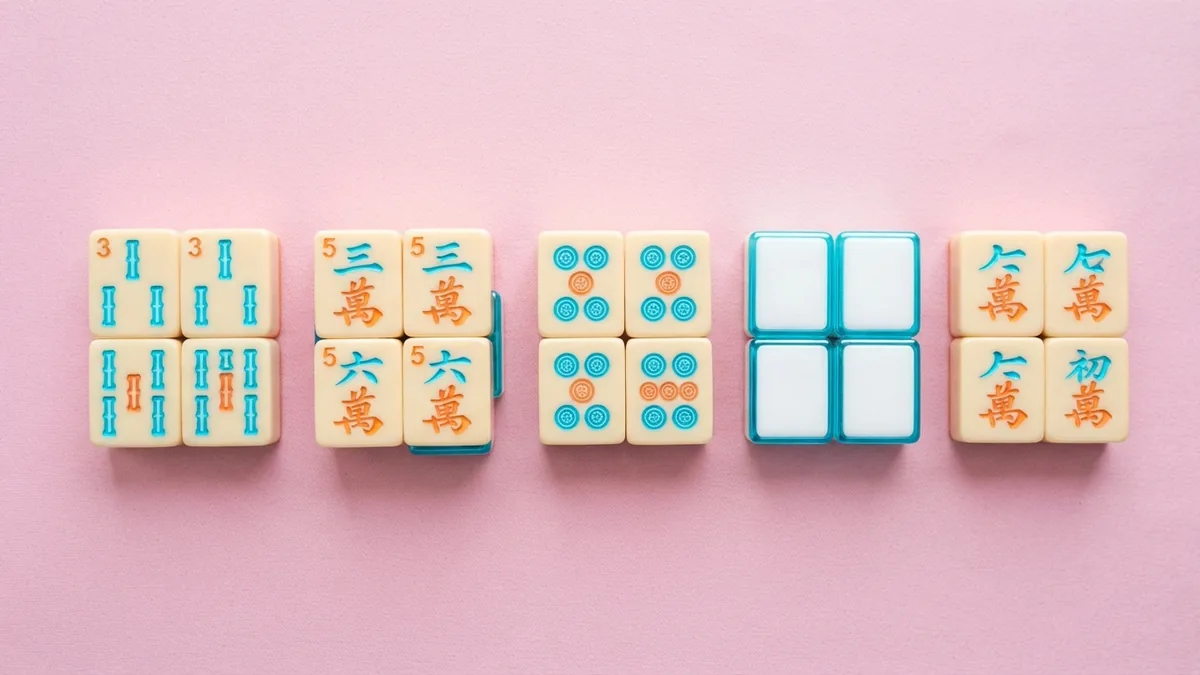
Three matching tiles make a pung. Three suited numbers in a row make a chow. Four matching tiles make a kong. These groups are called melds when shown as part of a hand.
Basic rules and winning hands
In many styles, each player starts with 13 tiles. The dealer starts with 14 and takes the first turn. A common winning hand has 14 tiles: four sets and a pair. Some styles also allow special hands, so agree on the rules before play.
You win by calling Mahjong when your tiles form a legal hand. You may complete the hand with a tile drawn from the wall. Many styles also let you win with a tile another player discards. Some rules require a minimum score before a hand can win.
Players can claim discards to complete certain sets. In many styles, only the next player may claim a chow. Any player may claim a pung or kong under common rules. After a claim, show the meld and discard a tile.
For beginners, the easy way to think about Mahjong is sets plus a pair. That goal helps you read your hand, but it does not cover every rule. Check which claims count and whether special hands are allowed. That avoids confusion mid-game.
- Agree on legal winning hands and discard claims.
- Decide whether a minimum score is needed to win.
- Set the scoring method before the first deal.
Set up the game
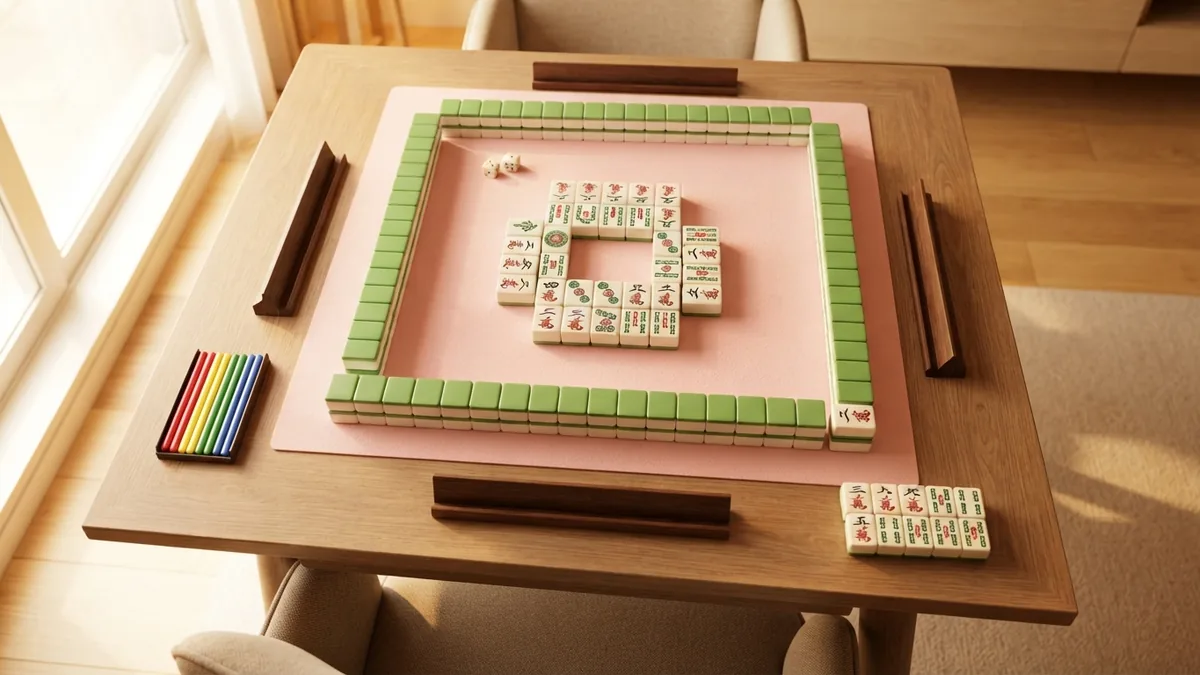
A common four-player game uses a shuffled set of tiles. Players build walls, often two tiles high, around a square. Choose a dealer and agree on the rules before dealing. This setup fits many popular styles, though local details may vary.
Most rules give each player 13 tiles. The dealer starts with 14 and makes the first discard. Sort your tiles by suit and honors, but keep them hidden from others. If your game uses bonus tiles, replace them as its rules direct.
- Choose a rule set and select the dealer.
- Shuffle the tiles face down and build the walls.
- Deal 13 tiles to each player and 14 to the dealer.
- Leave space for discards and exposed melds.
Use one rule set from start to finish, especially in a first game. Mixing rules can change the tile count, turn order, and score. Keep a short rule sheet nearby if the group is new.
How to play Mahjong, turn by turn
To learn how to play Mahjong, follow the turn cycle. The dealer begins by discarding one tile. Play then moves around the table. On a normal turn, draw one tile, check your hand, and discard one tile.
Use each draw to improve your hand. Keep tiles that can join a set or pair. Discard tiles that no longer fit your plan. If nobody claims a discard, the next player draws from the wall.
When a discard completes a set, say what you are claiming and show the tiles. Then discard one tile. If that tile completes your full hand, call Mahjong instead. The round may end without a winner when the wall runs out.
- Draw: Take a tile from the wall on your turn.
- Check: See if it helps a set, pair, or winning hand.
- Claim: Take a discard only when your rules allow it.
- Discard: Place one tile face up in the shared area.
- Win: Call Mahjong when your hand is complete.
Keep claimed melds face up in front of you. Leave hidden sets concealed unless your rules say otherwise. Know which claim you are making before you pick up a discard.
Beginner strategy and scoring
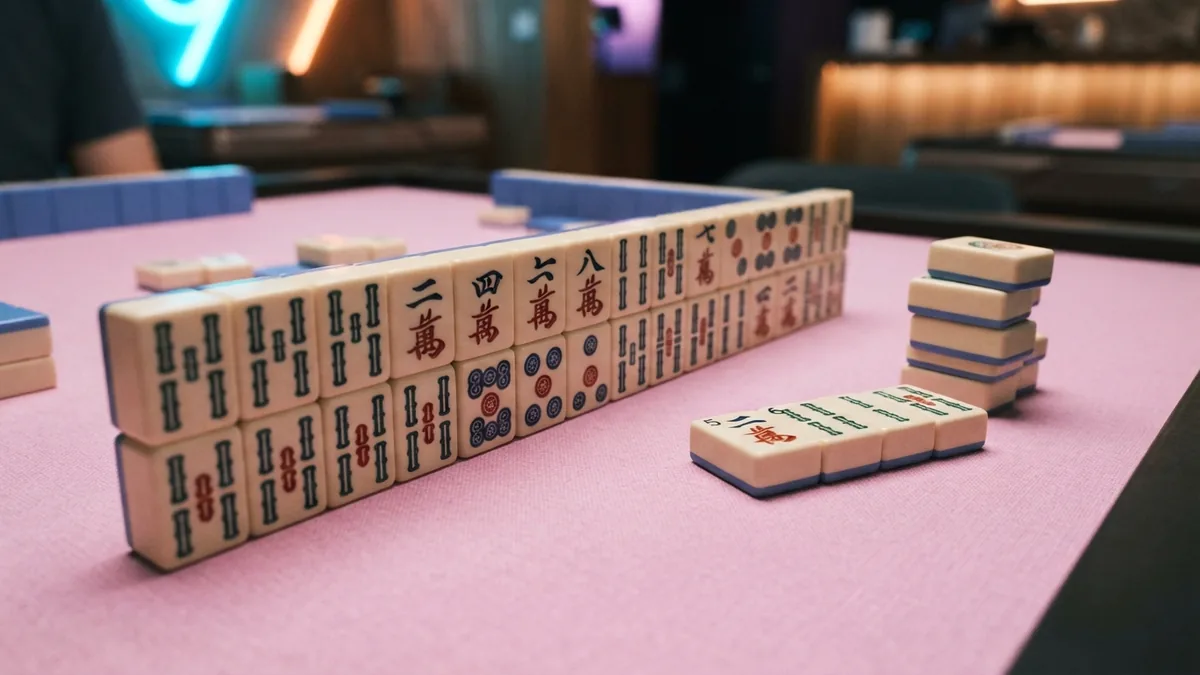
Start with a clear plan for your hand. Build around pairs and tiles that can form runs or groups. Lone honors and edge numbers can be hard to use. Drop them when they no longer help your hand.
Watch the discards, too. They show which tiles other players have let go. They can also warn you that a tile may help someone win. Do not chase every possible set. A focused hand is easier to finish.
Scoring changes by style. Some rules award points for sets, winning hands, or bonus tiles. Japanese riichi Mahjong uses its own hand and score rules. American Mahjong has distinct card-based hand patterns. Learn the scoring rules for your chosen style before play.
For a first round, keep score simple. Use the agreed score sheet or a basic point method. Confirm how a self-drawn win differs from a win on a discard. Clear rules matter more than complex scoring at the start.
- Keep tiles that can serve more than one hand plan.
- Watch discards before claiming a tile.
- Learn the local score rules before adding special hands.
Playing with two, three, or four players
Four players is the standard setup for many Mahjong styles. It uses the full turn cycle and the usual wall. If you are learning how to play Mahjong with four players, use the standard deal and agree on claims before starting.
Two-player Mahjong can work, but it needs house rules. Players may use a shorter wall, remove some tiles, or change which discards can be claimed. There is no single rule set for every two-player game. Agree on the changes before dealing.
Three-player Mahjong also varies by region and style. Some versions remove certain tiles or alter the wall and scoring. Others keep most of the set and adjust turn order. If you want to know how to play Mahjong with three people, pick one published or agreed rule set first.
Player count affects pace and strategy. With fewer players, discards cycle differently, and some tiles may be less likely to appear. Do not assume that four-player scoring works unchanged. Write down house rules so everyone uses the same version.
| Players | What to agree on | Good starting point |
|---|---|---|
| Four | Deal, claims, scoring, and special hands | Use the standard rules for your chosen style |
| Three | Tile set, turn order, and scoring changes | Choose a named three-player variant |
| Two | Wall size, claim rules, and scoring | Use a shared house-rule sheet |
Online games and apps often enforce one specific version. Check the rule page or practice mode before playing for a score. The terms and claims may differ from your table rules.
FAQs
How many people do you need to play Mahjong?
Many traditional Mahjong games use four players. Two- and three-player versions also exist, but they need rules made for that player count.
How many tiles are in a Mahjong set?
Many sets have 136 tiles. Sets with flowers and seasons often have 144.
How do you win a Mahjong hand?
In many styles, you win by making four sets and one pair. Some styles also allow special hands or require a minimum score.
Can you play Mahjong with two players?
Yes, with rules that set the wall, claims, and scoring for two players. Agree on those changes before the game begins.
Is American Mahjong the same as other styles?
No. American Mahjong uses distinct hand patterns and a card that lists eligible hands. Its rules and scoring differ from many other styles.